
Learning Exchange · AI-aware courses
21W.031 Explorations in Communicating about Science and Technology
Adapted with EunoAI
AI learning tool
EunoAI is an AI reading companion. A student uploads a PDF or a photo or scan of a page, picks the course they're annotating in, and highlights a line with a note. Instead of answering, the AI reading partner asks one question tied to that exact highlight, pointing back at the specific words that matter. A separate chat tab is there for open-ended questions. Every annotation and reply is saved to a dashboard of past conversations, organized by reading and joinable with a course code.
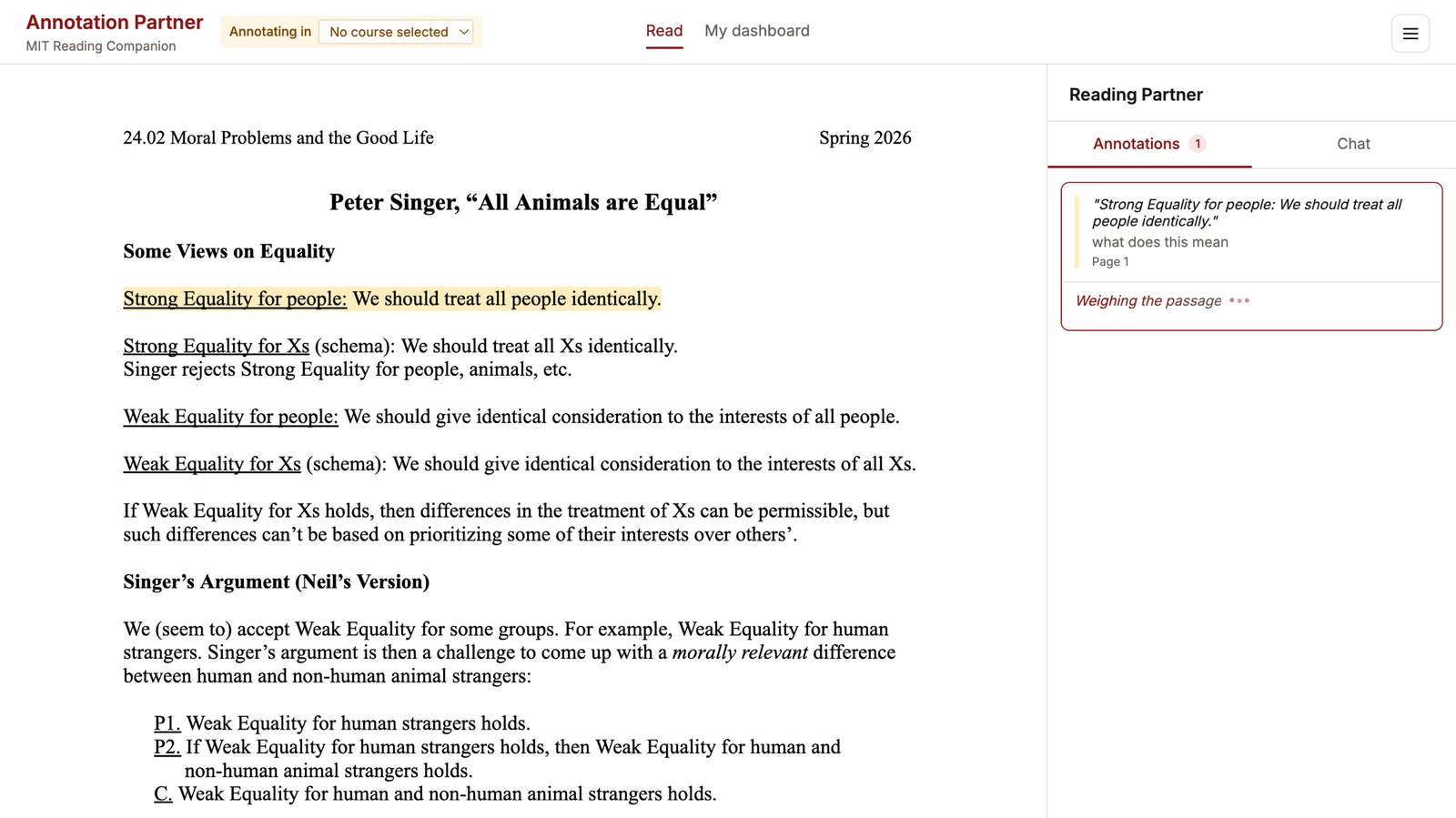
A student who's handed an explanation of a term skips the work of figuring it out themselves. EunoAI's reading partner looks at exactly what a student highlighted and asks one question that points back at the words that would answer it, so the student closes the gap themselves instead of being told the answer outright.

Reading and annotation
Starting a reading
- Upload a PDF, or a photo or scan of a page, to start a reading.
- Pick the course a reading belongs to before you begin.
Highlighting
- Highlight a line and add a note to flag what's on your mind.
- Every highlight and note is saved with the reading.
Socratic questions
How it responds
- Instead of answering, the reading partner asks one question tied to the exact line highlighted.
- A separate chat tab is there for open-ended questions that aren't tied to a specific highlight.
Dashboard
Past conversations
- Every annotation and reply is saved to a dashboard, organized by reading.
- Join a class's readings with a course code.
About the course
Examines principles of good writing, focusing on those associated with scientific and technical writing. Considers the effects of new media as an avenue for communicating about science. Students discuss scientific articles and essays and work in small groups to critique each other's writing. Assignments include a critical review, a science essay for the general public, and a research or service project proposal. Students choose topics that reflect their background and interests. Formal and informal presentations and group discussions develop oral communication skills.